
When raising crops, tissue and soil sampling are important practices to be used together to determine your nutrient management protocol. Soil testing reveals what nutrients are available in the soil while tissue testing shows a snapshot of nutrients in the plant part at the time of sampling. It is important to utilize both soil and tissue testing because these results can be different, which influences nutrient management decisions. While nutrients may be available in the soil, they may not be taken up by the plant due to other limitations such as water availability or physical soil characteristics, like temperature, soil moisture or compaction. Keep in mind that:
- Soil tests should be used as a baseline for determining nutrient management for the upcoming season before planting or before sidedress applications. To get a representative sample, it is recommended to take 10 cores to a depth ¾ of the tillage depth or 6-7 inches for no-tilled soils. Each sample should cover an area no larger than 5 acres and areas with known differences in soil texture, field history, or other factors should be sampled separately.
- Tissue samples can be taken during key growth stages and are the way to reveal specific nutrient deficiencies, toxicities, or optimal levels. Sometimes it may not even be a nutrient issue and plant tissue testing can help you rule that out during troubleshooting.
Of course, if you see any visual signs of nutrient deficiency, like yellowing leaves, a tissue test is critical for determining your plan of action to fix the issue, at least for the following year. Ideal plant tissue sampling stages vary based on the crop, so consult the sampling guidelines of your preferred lab to determine your sampling schedule and which tissues of the plant to sample.
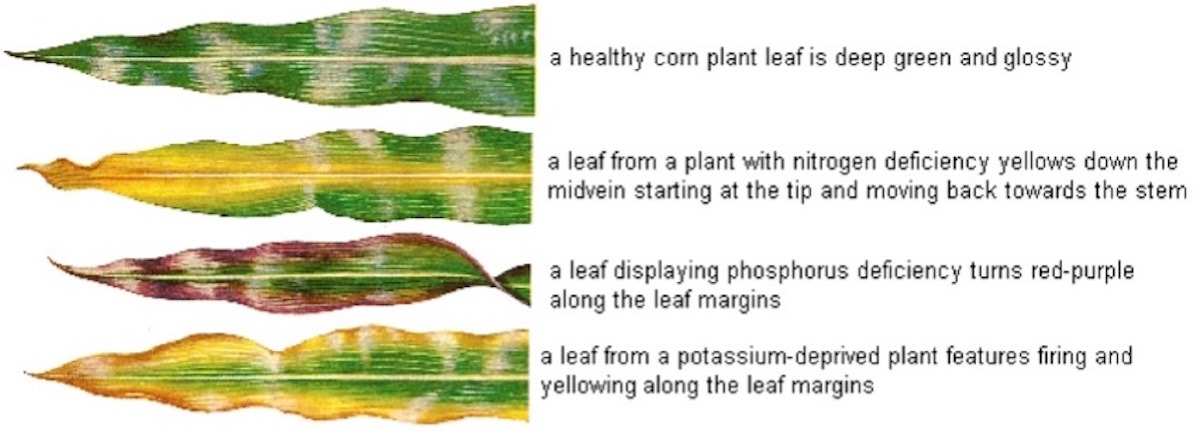
Once you have soil test and tissue test results, compare the two to look for differences. Also, nutrient interactions can be helpful in determining whether the remedy should come in the form of applying more nutrients to the soil or some other management approach. Even if nutrient management decisions cannot be applied in the same year that tests were taken, comparing your soil test, your tissue test, your fertilizer program, the environmental conditions, and the yield result will help you make a plan for addressing a field’s nutrient needs next year.
Nutrient testing may not always indicate that you need more nutrients. Taking a soil test before applying nitrogen may allow you to reduce your nitrogen application without impacting your yield. Even a small yield loss as a result of reduced nitrogen applications may make more sense economically when you balance input costs with crop prices. Precise — including variable rate technology — nutrient applications are a benefit to you in terms of reduced input costs, as well as to the environment when it comes to reduced nutrient loss to water sources. Another benefit of using soil and tissue testing together is determining if a nutrient imbalance is causing “nutrient antagonism,” which is a situation where the overabundance of one nutrient causes another nutrient to be limiting. See the University of Wisconsin Extension’s article “Crop Nutrients 101” for more information.
The bottom line: when it comes to soil and tissue sampling, one test should not be viewed as better than the other. Comprehensive nutrient testing can help you by diagnosing nutrient deficiencies, nutrient overabundance, non-nutrient rate-based field issues, and exact nutrient amounts for precise applications.
Grace Finnerty graduated from the University of Minnesota–Twin Cities with a degree in plant and soil science. She currently lives in southeastern Minnesota and works for University of Wisconsin Extension. Finnerty wrote this blog for LSP’s Soil Builders’ Network.