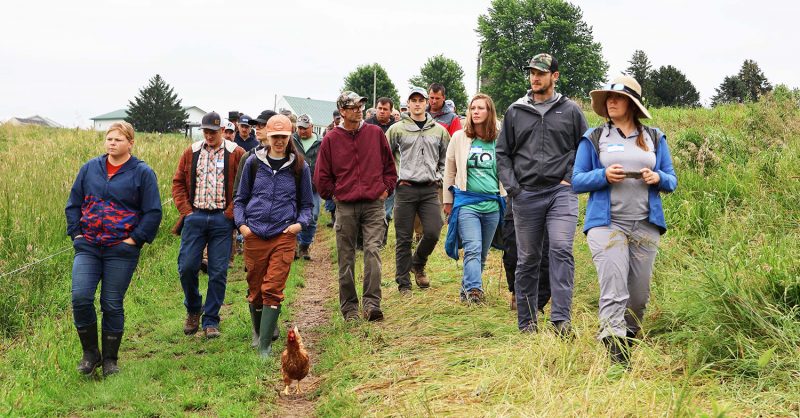
The Land Stewardship Project’s Soil Health Steering Committee got together in September 2024 to discuss ways of helping farmers in the region successfully adopt cover cropping, managed rotational grazing, no-till, and other regenerative practices. Discussions focused on developing a more viable small grains marketing infrastructure, supporting livestock integration into cropping operations, strengthening the Soil Builders’ Network, and making deeper investments in our localized peer learning groups such as soil hubs and grazing groups.
Over the past five years, LSP’s Soil Builders’ Network has grown to 4,000 people covering the region that encompasses southern Minnesota, northeastern Iowa, and southwestern Wisconsin. Based on surveys, it’s estimated that the Network has directly supported farmers in implementing regenerative practices such as cover cropping, reduced or no-till, and managed rotational grazing on more than 38,000 acres. For details on joining the Soil Builders’ Network, click here.
Are you interested in guiding LSP’s Soil Health Program vision? We will be recruiting new members for our Soil Health Steering Committee this spring. Contact LSP’s Alex Romano at aromano@landstewardshipproject.org if you are interested or would like more information. Are you interested in joining a farmer-to-farmer soil hub? Contact LSP’s Shea-Lynn Ramthun at slramthun@landstewardshipproject.org for more information.
See below for short bios on the farmers who currently belong to LSP’s Soil Health Steering Committee.
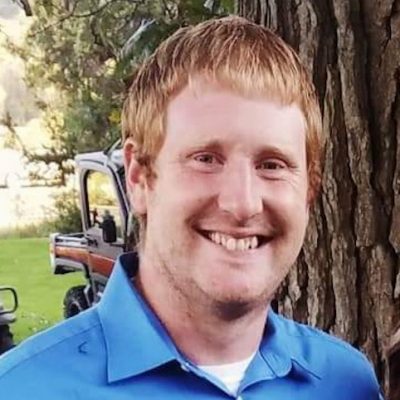
Tony Hackbarth
I took on this role to offer my perspective as a young farmer navigating the challenges of starting a farm from scratch. My journey through agriculture thus far has introduced me to some excellent role models. Many of these influences have helped shape my journey by showing me tons of different ideas and production models. I have also been blessed to have some very financially-minded people explain the importance of business in my farming journey. This spice-mix of styles has allowed us to create a healthy hybrid system that allows us quality-of-life and financial freedom. This lifestyle we have chosen is far from a career and the risks thus far have been rewarded by enjoying our time together. The mentors I have did a fantastic job of teaching me that success is self-defined — it is not to be determined by your neighbors. I hope I can help in any way by sharing my experiences.
Tony has served on LSP’s Soil Health Steering Committee since the fall of 2024.
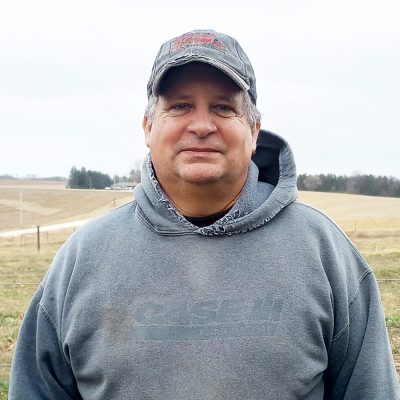
Bob Leisen
I farm with my brother on a farm South of Plainview Minn., in southern Wabasha County. We also run a couple of farms in northern Olmsted County. We are currently growing just corn and soybeans, with a few beef cattle on the side. We used to also have around 70-plus dairy cows, plus young stock, until a few years ago. We plant using a mix of tillage styles, depending on the crop, field, and the history of the field. We have been using different styles of cover crops and no-till for over 10 years now and are still learning. I joined LSP’s Soil Health Steering Committee to both learn more about soil health practices and to help promote smaller and large sized operations.
Bob has served on LSP’s Soil Health Steering Committee since the fall of 2024.
Alan Jostock
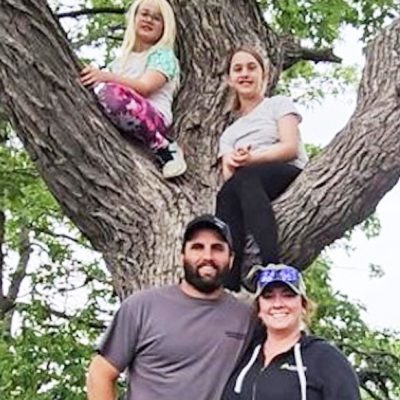
Hi, my name is Alan Jostock and our farm is Rolling J Farm. I operate it with my fiancé, Betsy, and my daughters, Gracelyn and Alexa, along with my parents, Ed and Lynn Jostock, in Hammond, Minn. We have a diversified farm that includes 60 beef cows and a 20-sow farrow-to-finish hog operation through which we market to Niman Ranch, a company focused on humanely and sustainable antibiotic- and hormone-free pork. We have 65 laying hens for egg sales, a few meat goats, and bottle calves. We finish all of our beef, with a portion being direct-marketed. We raise corn, soybeans, hay, oats, and barley, and grow cover crops, all while transitioning to 100% no-till production. I joined LSP’s Soil Health Steering Committee to strengthen my passion for saving the soil and to promote conservation to others. I hope my involvement as a Hammond City Council member, Riverland Farm Business Management Advisory Board member, and involvement in several other organizations will help bring new ideas to the table for LSP. I struggle seeing less-than-ideal or poor land management practices as I drive around and hope to show people there is a more sustainable way to hold our soil by leading as an example.
Alan joined LSP’s Soil Health Steering Committee in spring of 2025.
Rick Matt (left) and son, Damien.
Rick Matt
My name is Rick Matt and I farm with My wife, Renee, and our son, Damien. Our ranch, Varykino, is in northern Fayette County, about 20 miles south of Decorah, Iowa. We raise corn, soybeans, rye, oats, and barley, but our main enterprise is livestock. We are currently raising non-hormone treated beef for the European Union market and transitioning to all natural. We recently added hair sheep to the mix. We have a small free-range house flock for eggs and run a chicken tractor for broilers. We also transitioned from thousands of hogs to five that are grown in a pig tractor. We utilize no-till on all our crops, and rotate cash crops with a summer annual cover crop that consists of 12 to 18 species.
I joined LSP because in 2018 I had a soil scientist take a sample of our soil and show me under a microscope what was really there. That was my (AH-HA!!!!) moment. I started paying attention to what we were doing to the soil, intended and unintended. I want to spread the soil health message to anyone who will listen, but more importantly to producers not aware of the benefits of soil health.
Rick joined LSP’s Soil Health Steering Committee in spring of 2025.
Reed Duncan
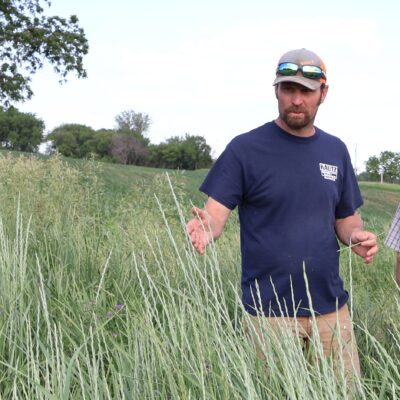
My name is Reed Duncan. I farm outside of Zumbro Falls, MN with my wife Denise and my son and daughter. We currently raise beef cattle, Idaho Pasture Pigs, and laying hens. Despite being raised in a conventional system, I now use a variety of soil health practices on my farm where I grow Kernza, wheat, hay, clover, and corn. In adulthood, I came to realize the importance of protecting our groundwater from nitrate runoff, the fragility of our soil, and the need to make a change in how we do things. Today, we use organic practices, inter-seeding, low tillage, and diverse crop rotations. This year, I also started doing my own spraying to prevent overspray that damages future crops. I want to build up healthy soil and a productive farm that I can leave behind for my children. I also want to be a model for others in my community. I love it when someone stops by and wants to learn about what I’m doing. Those conversations really motivate me.
I became connected with LSP in 2025 through a neighbor. Since then, I’ve been regularly attending meetings. I love hearing from other farmers about what they’re doing and using that knowledge to improve my own practices.
Reed joined LSP’s Soil Health Steering Committee in summer of 2026.
 Tony Hackbarth
 Bob Leisen
 Alan Jostock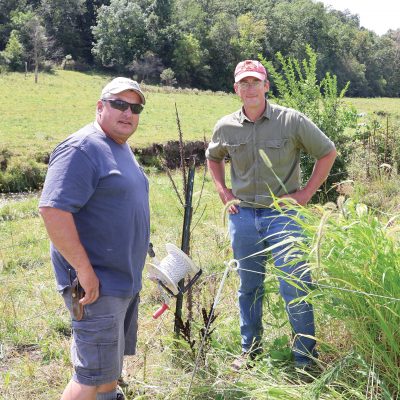
 Reed Duncan