Land Stewardship Project

Land Stewardship Project
  • About Us
    • Our Mission
    • Long Range Plan
    • Staff Directory
    • Board of Directors
      • LSP Board Committees
    • LSP Steering Committees & Working Groups
    • Contact Us
    • Past LSP Projects
    • Employment & Volunteer Opportunities
    • LSP Publications
    • Financial Statements
  • The Latest
    • Community Care
    • Songs for the Soil
    • CSA Farm Directory
    • Upcoming Events
    • News
      • News Releases
      • Media Contacts
      • LSP in the News
    • Blog
    • Podcast
    • Land Stewardship Letter
    • LIVE-WIRE Sign-up
    • Myth Busters
    • Fact Sheets
    • Farm Crisis Resources
  • For Farmers & Landowners
    • Farmland Clearinghouse
    • New Farmers
      • Farm Beginnings Class
      • Journeyperson Course
      • Farm Dreams
      • Accessing Farmland
      • Farmland Clearinghouse
      • Beginning/Retiring Farmer Tax Credit
      • Beginning Farmer Profiles
      • Fresh Voices Podcast Series
    • Retiring Farmers & Landowners
      • Farmland Clearinghouse
      • Farm Transition Course 2026
      • Conservation Leases
      • Beginning/Retiring Farmer Tax Credit
      • Land Transition Tools
      • Transition Stories
    • Soil Health
      • Cover Crops
      • Grazing
      • No-till
      • Microbiology
      • Kernza
      • Soil Builders’ Network
      • Soil Builders’ E-Letters
      • Soil Health Steering Committee Members
      • Ear Dirt Soil Health Podcast Series
    • Cropping Systems Calculator
    • Conservation Leases
  • Creating Change
    • Community-Based Food Systems
      • Ear Bites Community-Based Food Podcast Series
    • Policy Campaigns
      • Soil Health & Climate Change
      • Healthcare
      • Factory Farms
        • Anti-Competitiveness & Price Gouging
      • Federal Policy
        • A Farm Bill For Us
      • State Policy
        • MN Farm, Food & Climate Funding
      • Developing Leadership
    • Justice & Stewardship
    • Organizational Stewardship
  • Get Involved
    • Your Membership Matters
    • Take Action!
    • Upcoming Events
    • Land Stewardship Action Fund
    • Connect with LSP
      • Stay Connected
      • Join, Donate, or Renew Today!
      • Shop
      • Employment & Volunteer Opportunities
      • Legacy Giving
    • Network with LSP Members
      • Farmland Clearinghouse
      • Soil Health
    • Farmland Clearinghouse
  • Join, Donate, or Renew Today!
  • Stay Connected
  • Contact Us
  • Shop
Search
More...

LSP Publications

Share

  • Facebook
  • Pinterest
  • email

As part of its education-to-action strategy, the Land Stewardship Project periodically produces deeply researched publications on everything from soil health and local democracy to the need for policy reform.

Click on the Headings to Download pdfs of these LSP Publications

Big Bird. Big Problem.: How the Poultry Industry is Turning the Avian Flu Pandemic into a Source of Profit at Taxpayer’s Expense While Decimating Our Farm & Food System
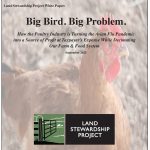
In September 2025, the Land Stewardship Project produced a white paper on the strain of the H5N1 avian influenza virus that emerged in 2022 in the United States. The white paper asks key questions about the role the mega-confinement, industrialized poultry system of agriculture has played in creating and propagating this pandemic. Are these operations the “victims” of a virus that originated in an environment outside of Big Ag’s control? Or is the Big Bird CAFO system itself the source of the problem? And is society’s strategy of paying big poultry companies to wipe out infected flocks and to continue business as usual yet one more way of subsidizing a system of food production that is inherently unsustainable? The paper concludes with a short list of proposals that could start us on the road toward a more resilient poultry production system.

LSP Bridge to Soil Health Program’s Peer-to-Peer Learning Groups:
The Strategy & Construction of Regional Farmer Soil Hubs
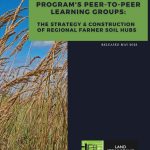
Through this publication, LSP is sharing our experience constructing and implementing the Regional Soil Hubs through our Bridge to Soil Health initiative. We hope that other agricultural groups, including farmer-led groups, might want to borrow or adapt some of the approaches we’ve used.


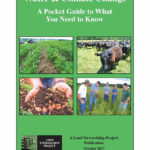
Soil Health, Water & Climate Change: A Pocket Guide to What You Need to Know

This 50-page pocket guide provides policymakers, educators, journalists, and the general public an introduction to the latest innovations in science and farming related to building soil health, and how implementing such practices on a wide scale basis can make agriculture a powerful force for creating a landscape that is good for our water and our climate. Download the app here; download the pdf here.
 

Our Minnesota Future: A Vision for Rural Minnesota
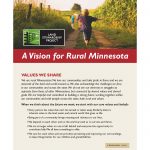
A Vision for Rural Minnesota was developed from input given by hundreds of Land Stewardship Project members during the fall of 2017. This publication is designed as a tool to use in conversations with neighbors, candidates for public office, and others about our values, challenges, and vision for the future of rural communities and our state.

Building the Bridge to Soil Health
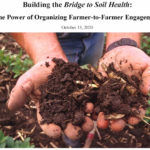
In October 2020, a special LSP report was published: Building the Bridge to Soil Health: The Power of Organizing Farmer-to-Farmer Engagement. It describes the organization’s experience with launching the Bridge to Soil Health initiative in Minnesota. The report is available here.

Farming to Capture Carbon & Address Climate
Change Through Building Soil Health
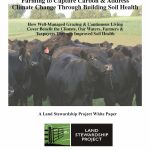
This LSP white paper, written by George Boody in 2020, describes how well-managed grazing and continuous living cover benefit the climate, our waters, farmers, and taxpayers through improved soil health.

Special Report: Soil Health, Profits & Resiliency
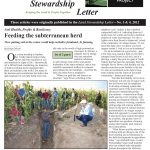
In 2012 the Land Stewardship Letter published a series of articles on the groundbreaking work being done by a team of farmers, conservationists and scientists in North Dakota’s Burleigh County to combine soil health, profitability, and greater overall community sustainability. This special report combines those articles and information on additional resources.

Special Report: King of the Cover Crops
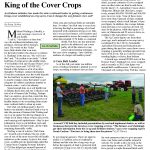
In 2015 and 2016, the Land Stewardship Letter published a series of articles on the Indiana soil health hubs that brought together farmers, resource professionals, implement dealers, and input suppliers. These networks helped make the state a leader in cover cropping and greatly influenced LSP’s development of similar soil health hubs in Minnesota.

The Money Pit: How Minnesota Property Taxpayers are Subsidizing Factory Farms 
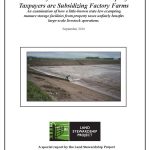
This is an LSP report on how a little-known law exempting manure storage facilities from property taxes unfairly benefits large-scale livestock operations.

The Land Stewardship Letter 
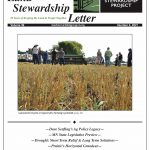
This is the nationally-known publication of the Land Stewardship Project. Members of the Land Stewardship Project receive a hard copy of this newsletter as a benefit. Annual membership dues are $35. Address all membership inquiries to Clara Sanders via e-mail or at 612-400-6340. Click here for detailed information on becoming a member of LSP today.

Connecting Economic & Racial Justice to Expand a Rural Social Justice Network
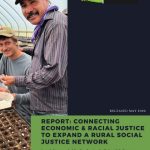
LSP has developed “Connecting Economic & Racial Justice to Expand a Rural Social Justice Network” as a reference document for any group, agency, or organization looking to establish and grow a social justice network in their locality. This report is also intended to guide other social justice networks through discussions and activities that draw out their values, experiences, and ideas for influencing social change in their communities.
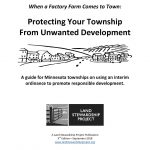
Protecting Your Township from Unwanted Development 

Produced by LSP’s Policy and Organizing Program, this booklet provides guidance to townships on using the Minnesota Interim Ordinance and other tools in the state’s Municipal Planning law. It also contains an extensive list of resources. This is the 3rd edition of this publication; it was originally written in 1997 and updated again in 2006. The 2018 version includes significant updates, including information on frac sand mining operations. 65 pages.

People’s EIS Scoping Report: Citizen Comments on the Necessary Scope and Depth of the Environmental Impact Statement on the Minnesota Sands Frac Sand Proposal
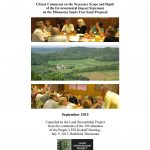
On Tuesday, July 9, 2013, 100 people attended a Land Stewardship Project meeting in Rushford, Minn., to state their serious concerns about the destructive impacts a frac sand mining proposal would have on their lives and communities and to raise the specific issues that must be included within the scope of the Environmental Impact Statement (EIS) being done on the proposal. Their comments are compiled in this report.

Creating a Bright Future for Livestock Farms in Minnesota: A Report by the Citizen Task Force on Livestock Farms & Rural Communities
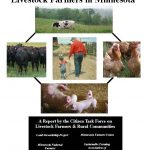
In 2004, the Citizen Task Force on Livestock Farmers and Rural Communities studied the challenges and opportunities facing livestock farmers and rural communities, and assembled a list of priority recommendations to policy makers and community leaders on ways to increase the number and profitability of Minnesota livestock farmers in ways that benefit rural communities, recognizing that livestock farmers and vibrant rural communities are interrelated.

The Syngenta Corporation & Atrazine: The Cost to the Land, People & Democracy 
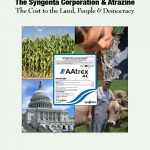
In January 2010 the Land Stewardship Project and Pesticide Action Network North America collaborated on a special report on atrazine, one of the most commonly detected pesticides in U.S. ground and surface water. This report offers a review of the many environmental and health concerns surrounding atrazine and describes how its inventor and primary manufacturer, Syngenta, has resisted attempts to conduct extensive research on the chemical and regulate its use. The report also highlights what farmers can do to end their reliance on atrazine.

Crop Insurance Reports

Farmer-members of the Land Stewardship Project have long called for reforms to the federally subsidized crop insurance program. Originally developed as a basic safety net that would prevent farmers from being wiped out by a weather disaster, the program has evolved into a system for subsidizing the growth and consolidation or mega-cropping operations. This has been bad news for small and medium-sized farmers as well as soil health, water quality, and wildlife habitat. Over the years, LSP has worked with its members and various experts to develop numerous reports on what’s wrong with the crop insurance program and what reforms are needed to bring it back to its roots as a fair safety net.


Crop Insurance: How a Safety Net Became a Farm Policy Disaster
– White Paper #1: Crop Insurance — The Corporate Connection

Crop Insurance: How a Safety Net Became a Farm Policy Disaster

– White Paper #2: Crop Insurance Ensures the Big Get Bigger

Crop Insurance: How a Safety Net Became a Farm Policy Disaster

– White Paper #3: How Crop Insurance Hurts the Next Generation of Farmers

Crop Insurance: How a Safety Net Became a Farm Policy Disaster

– Principles of Reform

Crop Insurance: How a Safety Net Became a Farm Policy Disaster

– Why Investigate Crop Insurance?

Crop Insurance: How a Safety Net Became a Farm Policy Disaster

– Fact Sheet: How Federally Subsidized Crop Insurance Works

Crop Insurance: A Torn Safety Net

– Why the Farm Bill’s Biggest Agricultural Program is a Boon to Corporations and a Bust for Family Farmers & the Land

Contact

Brian DeVore, managing editor, 612-816-9342, e-mail

  • About Us
    • Our Mission
    • Long Range Plan
    • Staff Directory
    • Board of Directors
      • LSP Board Committees
    • LSP Steering Committees & Working Groups
    • Contact Us
    • Past LSP Projects
    • Employment & Volunteer Opportunities
    • LSP Publications
    • Financial Statements
  • Join, Donate, or Renew
  • Building People Power

Upcoming Events

×

February 2026

Tuesday February 3

8:45 am – 3:45 pm
2026 Extension Women in Ag Conf.
Tuesday February 3
8:45 am – 3:45 pm
2026 Extension Women in Ag Conf.
The Park Event Center, 500 Division St, Waite Park, MN 56387, USA

This one-day conference includes a farmer panel to kick off the morning, interactive break-out sessions, and multiple opportunities to re-connect with friends while making new ones. As always, interact with conference sponsors in the exhibitor hall and enjoy the wellness space to relax and recharge throughout the day. If your schedule allows, please attend the optional pre-conference session the day before on Monday, Feb. 2. 

To learn more about the conference, view the conference website: z.umn.edu/WAGN2026.

11:00 am – 12:00 pm
Beyond the Crop: Birds, Biodiversity, and the Power of Edge Habitat
Tuesday February 3
11:00 am – 12:00 pm
Beyond the Crop: Birds, Biodiversity, and the Power of Edge Habitat
Online

This 10-lesson Wild Farm Alliance virtual course teaches agricultural professionals and farmers how to support beneficial birds and manage pest birds on farms. By learning how to assess the farm’s avian needs and opportunities, farms can be designed to provide for a diversity of beneficial birds. 

If pest birds are a problem, they can be discouraged with specific practices during the shorter periods when they cause damage. The sessions cover the latest research, tools and resources, and are given by experts in avian pest control, entomology, ornithology and conservation. While many topics and species are specific to the Midwest, most of the principles discussed are applicable across regions. 

Continuing Education Credits have been requested and are expected to be approved from American Society of Agronomy.

For details and to register, click here. 

The Course Schedule:

LESSON 1

Why Birds Belong on the Farm: Biodiversity, Pest Control & A Thriving Landscape

Tuesday, September 23, 2 p.m. CT


LESSON 2

Birds as Pest Control Allies on the Farm

Tuesday, October 14, 11 a.m. CT


LESSON 3

Birds in the Balance: Pest Control Services Across Crop Types

Tuesday, November 4, 11 a.m. CT


LESSON 4

Integrating Habitat into Croplands: Prairie Strips and Bird Conservation

Tuesday, December 2, 11 a.m. CT


LESSON 5

Birds on the Farm: Balancing Biodiversity and Food Safety

Tuesday, January 13, 11 a.m. CT


LESSON 6

Beyond the Crop: Birds, Biodiversity, and the Power of Edge Habitat

Tuesday, February 3, 11 a.m. CT


LESSON 7

Bridging Forestry, Farming, and Habitat

Tuesday, February 24, 11 a.m. CT


LESSON 8

Perennial Pathways: Agroforestry for Birds and Biodiversity on Farms

Tuesday, March 17, 11 a.m. CT


LESSON 9

Birds on the Range: How Grazing Practices Shape Habitat for Grassland Species

Tuesday, April 7, 11 a.m. CT


LESSON 10

Birds at Risk: How Pesticides Shape Safety on Agricultural Lands

Tuesday, April 28, 11 a.m. CT

5:30 pm – 8:00 pm
LSP Farm Transition Planning Course
Tuesday February 3
5:30 pm – 8:00 pm
LSP Farm Transition Planning Course
Zoom Online

The Land Stewardship Project’s long-running course for farmers and other landowners looking to transition their agricultural operations to the next generation is expanding into South Dakota in 2026. The Land Stewardship Project (LSP) Winter Farm Transition Planning Course, which enters its 10th session in 2026, provides a holistic opportunity to dig into important topics and learn from experienced farmers and professionals about the options that farmers and landowners have when looking to pass their farm on.

The standard Zoom online LSP course will be held on seven Tuesday evenings starting on January 27 and running through March 10. The sessions build on one another, so attendance at all sessions ensures the greatest understanding and planning opportunities. The course fee is $250 per family, and registration is open through Jan. 9 at https://landstewardshipproject.org/transition2026.

New this year is an expanded course offering for South Dakota attendees as part of a partnership LSP has formed with Dakota Rural Action and Rural Revival.

The South Dakota course, led by Dakota Rural Action and Rural Revival and using the LSP curriculum, includes seven weekly in-person sessions, with a full-day Saturday kick-off session, and another full-day session to close the training. Sessions two through six will take place on Tuesday evenings for two-and-a-half hours. The dates are: Jan. 31, Feb. 3, Feb. 10,  Feb. 17, Feb. 24, March 3 and March 14. As with the fully online course, the course fee is $250 per family, and the registration deadline is Jan. 9. To register for the South Dakota course, visit https://qrco.de/farmtransitions2026.

Presenters at both workshops will include other area farmers who are implementing farm transition plans, as well as professionals representing the legal and financial fields as they relate to agricultural businesses. Workshop participants will have an opportunity to begin engaging in the planning process as well as to learn about resources for continuing the process after the workshop has ended.

Join with Google Meet: https://meet.google.com/jxm-nrix-qwe

Learn more about Meet at: https://support.google.com/a/users/answer/9282720

5:30 pm – 8:00 pm
South Dakota Farm Transition Planning Course
Tuesday February 3
5:30 pm – 8:00 pm
South Dakota Farm Transition Planning Course
South Dakota

  • Are you a farm family or landowner thinking about the future or next steps for your farm?
  • Are you interested in planning for the next generation of farmers on your land?
  • Do you have a spouse/partner helping to make these decisions? Are you both on the same page?
  • Are you ready to begin the planning process but don’t know where to start?

For the first time, Rural Revival is hosting a holistic Farm Transition Planning Course in collaboration with The Land Stewardship Project (LSP) and Dakota Rural Action (DRA). This opportunity is coordinated alongside the land transition course that LSP has provided for Minnesota farmers over the past 9 years. The course includes seven weekly sessions, with a full day Saturday to kick off, and again to close the training. Sessions 2-6 will take place on Tuesday evenings for 2 1/2 hours. Sessions will bring professionals, farmers and LSP/DRA staff together to dig into values and goals, communications, generational, financial, legal, and long-term care considerations. The sessions build on each other and it is important to plan on attending all of them. The sessions will include participatory activities and there will be work families are encouraged to complete outside of the gathered course time.

The topics, dates, and times for the course are:

  • Saturday, Jan 31st: Goal Setting for LIfe & Land, 10:00am-4:00pm
  • Tues. Feb 3: Values and Why Farm Transition Planning is Needed, 5:30pm-8:00pm
  • Tues. Feb 10: Financial Considerations, 5:30-8:00pm
  • Tues. Feb 17: Legal Considerations, 5:30-8:00pm
  • Tues. Feb 24: Working with the Next Generation Farmers, 5:30-8:00pm
  • Tues. March 3: Long Term Care Considerations, 5:30-8:00pm
  • Saturday, March 14: Resources and Planning Next Steps, 10:00am-4:00pm 

The course fee is $250 per family. The registration deadline is January 9. For more information and to register, click here.

For more farm transition resources, click here. For more course information, contact:

  • DRA’s Megan EisenVos at megan@dakotarural.org, 605-277-3790
  • LSP’s Karen Stettler at stettler@landstewardshipproject.org, 507-458-0349
  • Rural Revival Treasurer, Roy Kaufman at lorokauf@gwtc.net

Thursday February 5

12:00 pm – 2:00 pm
'Rotating into Resiliency' Winter Workshop Series for Crop Producers
Thursday February 5
12:00 pm – 2:00 pm
'Rotating into Resiliency' Winter Workshop Series for Crop Producers
Lewiston & Montevideo, Minn., & online

Are you a crop producer interested in integrating small grains into your rotation as a way to build resiliency in the face of increasingly extreme weather, volatile markets, and a sometimes-overwhelming workload? The Land Stewardship Project (LSP), in collaboration with U of M Extension, is offering a free “Rotating into Resiliency” winter workshop series during the first three Thursdays of February (Feb. 5, 12, and 19, from noon to 2 p.m.)  that will help participants navigate the agronomic, economic, managerial, and environmental challenges of diversifying their operations. The series will consist of three sessions that will be offered in a hybrid format — there will be an option to participate in-person at LSP’s offices in Montevideo and Lewiston, Minn., as well as online. Lunch will be provided at the in-person venues.

The sessions will feature panel discussions involving farmers and others who have extensive experience in the areas of marketing, financial management, diverse crop production, managing extreme climate conditions, and goal setting/planning. Participants will also have a chance to problem solve, discuss issues, and share ideas with fellow cohort members. Each participant will have an opportunity to develop a resiliency-based, diversified cropping plan that they can implement during the 2026 growing season. 

Participation in the “Rotating into Resiliency” cohort is free. For more information and to register, click here.

View Full Calendar

Recent Posts

  • Land Line: Oats, Nitrates & Karst, Fraudulent Science, ICE & Ag, Soil Health, Biostimulants, Fertilizer Price Collusion January 31, 2026
  • Farmers Gather in Rochester to Discuss Strategies for Diversifying Cropping Systems January 28, 2026
  • Land Line: Bridge Payments, Food Pyramid, Farmland Prices, Riverview Dairy, CAFO Funding, Restoring Habitat, ICEing Ag, Nitrates in Winter January 22, 2026
  • Tell Congress Farmers Need Real Relief & Real Solutions January 18, 2026
  • LSP Stands With Immigrant Neighbors in Rural Minnesota  January 12, 2026

Montevideo

111 North First Street
Montevideo, MN 56265

(320) 269-2105

Lewiston

180 E. Main Street
Lewiston, MN 55952

(507) 523-3366

Minneapolis

821 E. 35th Street #200
Minneapolis, MN 55407

(612) 722-6377

  • Privacy Policy

Copyright © 2026 Land Stewardship Project. All rights reserved.

https://landstewardshipproject.org/publications