Land Stewardship Project

Land Stewardship Project
  • About Us
    • Our Mission
    • Long Range Plan
    • Staff Directory
    • Board of Directors
      • LSP Board Committees
    • LSP Steering Committees & Working Groups
    • Contact Us
    • Past LSP Projects
    • Employment & Volunteer Opportunities
    • LSP Publications
    • Financial Statements
  • The Latest
    • Community Care
    • Songs for the Soil
    • CSA Farm Directory
    • Upcoming Events
    • News
      • News Releases
      • Media Contacts
      • LSP in the News
    • Blog
    • Podcast
    • Land Stewardship Letter
    • LIVE-WIRE Sign-up
    • Myth Busters
    • Fact Sheets
    • Farm Crisis Resources
  • For Farmers & Landowners
    • Farmland Clearinghouse
    • New Farmers
      • Farm Beginnings Class
      • Journeyperson Course
      • Farm Dreams
      • Accessing Farmland
      • Farmland Clearinghouse
      • Beginning/Retiring Farmer Tax Credit
      • Beginning Farmer Profiles
      • Fresh Voices Podcast Series
    • Retiring Farmers & Landowners
      • Farmland Clearinghouse
      • Farm Transition Course 2026
      • Conservation Leases
      • Beginning/Retiring Farmer Tax Credit
      • Land Transition Tools
      • Transition Stories
    • Soil Health
      • Cover Crops
      • Grazing
      • No-till
      • Microbiology
      • Kernza
      • Soil Builders’ Network
      • Soil Builders’ E-Letters
      • Soil Health Steering Committee Members
      • Ear Dirt Soil Health Podcast Series
    • Cropping Systems Calculator
    • Conservation Leases
  • Creating Change
    • Community-Based Food Systems
      • Ear Bites Community-Based Food Podcast Series
    • Policy Campaigns
      • Soil Health & Climate Change
      • Healthcare
      • Factory Farms
        • Anti-Competitiveness & Price Gouging
      • Federal Policy
        • A Farm Bill For Us
      • State Policy
        • MN Farm, Food & Climate Funding
      • Developing Leadership
    • Justice & Stewardship
    • Organizational Stewardship
  • Get Involved
    • Your Membership Matters
    • Take Action!
    • Upcoming Events
    • Land Stewardship Action Fund
    • Connect with LSP
      • Stay Connected
      • Join, Donate, or Renew Today!
      • Shop
      • Employment & Volunteer Opportunities
      • Legacy Giving
    • Network with LSP Members
      • Farmland Clearinghouse
      • Soil Health
    • Farmland Clearinghouse
  • Join, Donate, or Renew Today!
  • Stay Connected
  • Contact Us
  • Shop
Search
More...

No-till

Share

  • Facebook
  • Pinterest
  • email

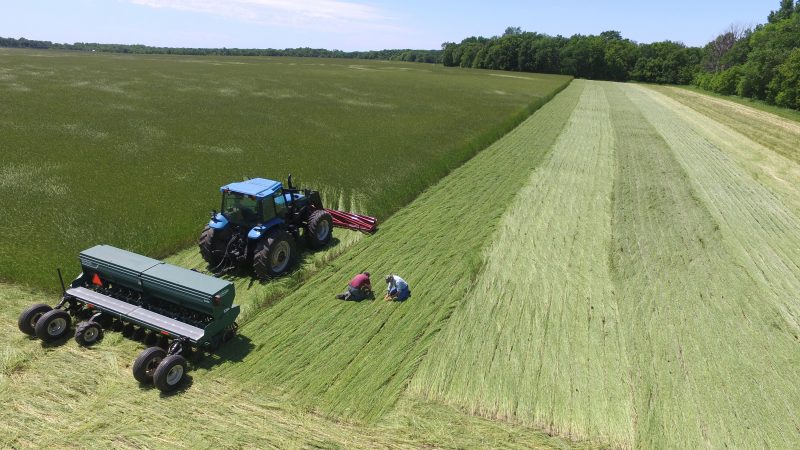
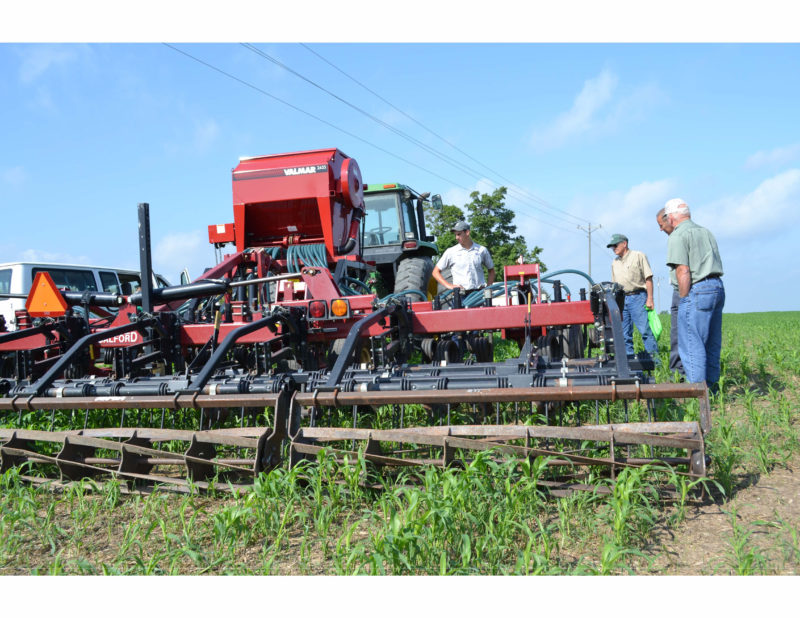
The first step to rebuilding soil is to reduce or eliminate tillage. Whether organic or conventional, new technologies are available to help all farmers lessen their impact on the soil. The benefits of leaving soil in place includes erosion prevention, cost savings on fuel and equipment use, alleviation of compaction, better water infiltration, and leaving behind residual plant matter to armor the soil’s surface.

Without disturbance, the soil can start to rebuild structure and tilth, conserve organic matter, and become a habitat for larger soil organisms, like earthworms. To address the initial learning curve and help farmers transition successfully, check out the resources below.
No-till Fact Sheets

• No-till for Beginners
• No-till & Fertilizer
• No-till Planter Set-up

Got No-till Questions?

Have questions about getting started with no-till or do you want to tweak your current no-till system? Give LSP a call at 507-523-3366.

Got an Idea?

If you have an idea you’d like to have featured in a video, blog, podcast, or field day, contact us.

Field Days & Workshops

See our web calendar for the latest LSP field days, workshops  & pasture walks

No-till Videos

Check out LSP’s series of videos featuring farmers and other experts talking about the role no-till and other regenerative practices can play in building healthy, profitable soil.

LSP Soil Health Podcast Series

Check out LSP’s ongoing Ear Dirt podcast series for conversations on cover cropping, no-till, managed rotational grazing, fungi, and just about anything else that builds soil health.

Related Posts

  • Ear to the Ground 269: Soil’s Stairway to Heaven

    Mike Seifert is using cover cropping and no-till to make up for the soil damage caused by years of heavy metal tillage. One rainy night…

    Ear to the Ground 269: Soil’s Stairway to Heaven
  • A Sense of Where You Are: Seeking Signs of Life

    January 18, 2025

    Note: This is the 4th installment in the 12-part “A Sense of Where You Are” series. 
    Jerry and Nancy Ackermann’s context is this: for around four…

    Blog
    A Sense of Where You Are, beneficial insects, corn-soybean production, cover crops, crop diversity, Jerry and Nancy Ackermann, no-till, soil health
    A Sense of Where You Are: Seeking Signs of Life
  • Ear to the Ground 268: Rolling Down the CC River

    A farmer, a soil conservationist, and a crops specialist talk about how the roller crimper system can help extend the benefits of a cover crop.
    More…

    Ear to the Ground 268: Rolling Down the CC River

Soil Health Team

  • Alex Kaminski, 320-269-2105, e-mail
  • Robin Moore, 612-767-9480, e-mail
  • Shea-Lynn Ramthun, e-mail
  • Alex Romano, 612-767-9880, e-mail
  • Sarah Wescott, 612-767-9881, e-mail
  • For Farmers & Landowners
    • Farmland Clearinghouse
    • New Farmers
      • Farm Beginnings Class
      • Journeyperson Course
      • Farm Dreams
      • Accessing Farmland
      • Farmland Clearinghouse
      • Beginning/Retiring Farmer Tax Credit
      • Beginning Farmer Profiles
      • Fresh Voices Podcast Series
    • Retiring Farmers & Landowners
      • Farmland Clearinghouse
      • Farm Transition Course 2026
      • Conservation Leases
      • Beginning/Retiring Farmer Tax Credit
      • Land Transition Tools
      • Transition Stories
    • Soil Health
      • Cover Crops
      • Grazing
      • No-till
      • Microbiology
      • Kernza
      • Soil Builders’ Network
      • Soil Builders’ E-Letters
      • Soil Health Steering Committee Members
      • Ear Dirt Soil Health Podcast Series
    • Cropping Systems Calculator
    • Conservation Leases
  • Join, Donate, or Renew
  • Building People Power

Upcoming Events

×

December 2025

Wednesday December 10

9:00 am – 11:30 am
Organic Fruit Growers Climate Resilience Workshop
Wednesday December 10
9:00 am – 11:30 am
Organic Fruit Growers Climate Resilience Workshop
Zoom online

In December and January, the Organic Fruit Growers Association is offering a series of climate resilience workshops. Workshop goals are to learn about the changing climate in our region and the expected impacts on fruit farmers and to select climate resilience practices which are suited to your farm’s goals and values. The outcome of the workshops will be a written climate resilience plan with actionable steps to make your farm more resilient to changing climate. 
 
Workshops will be led by University of Minnesota extension educators Katie Black and Madeline Wimmer and include times for farmer-to-farmer discussion. This series includes the following four meetings. Expect to spend an additional 4-10 hours outside the meetings developing your farm’s climate resilience plan:

  • Wednesday Dec. 3, 9 a.m.-11:30 a.m. (online via Zoom)
  • Wednesday, Dec. 10, 9 a.m.-11:30 a.m. (online via Zoom)
  • Monday, Dec. 22, discussion (online via Zoom — optional but encouraged)
  • Wednesday, Jan. 7, 10 a.m.-3 p.m. (in-person workshop in La Crosse, Wis. Lunch provided, and you can be reimbursed for mileage traveling to and from the meeting.)

For details and to register, click here. 

6:30 pm – 8:00 pm
How to Make Your Farm's Website Convert Visitors to Customers
Wednesday December 10
6:30 pm – 8:00 pm
How to Make Your Farm's Website Convert Visitors to Customers
Zoom Online

Join Sarah Carroll of Greener Pastures and Michelle M Sharp of Meet the Minnesota Makers in this 90-minute virtual workshop to learn about what your business website needs to tell its story, engage customers, and turn visits into real sales.

This workshop lays out the essential components of a user-friendly website for direct-to-consumer farms or food producers. No prior website skills are required.

Topics covered:

• How to make your products searchable by customers.

• What makes a compelling About Me page.

• The right balance of images to text.

• How to engage customers right from your home page.

• Incorporating FAQs.

Who this training is for:

This workshop is ideal for the farm or ag business that has launched an initial website that’s ready to upgrade or for the farm that has not yet created its own website. This workshop is both for farmers/food producers and ag ecosystem professionals that support farmers/food producers in their marketing and website efforts.

For details and to register, click here. 

Thursday December 18

All Day
MDA Urban Farm Conservation Mini-grant Deadline
Thursday December 18
MDA Urban Farm Conservation Mini-grant Deadline
MDA

A grant opportunity for urban farmers in Minnesota to receive up to $5,000 to make conservation-focused improvements is now open for applications.

The Minnesota Department of Agriculture (MDA) is once again offering an Urban Farm Conservation Mini-grant with approximately $100,000 available, thanks to funding from the USDA’s Natural Resources Conservation Service. This year the program has expanded eligibility.

Who is eligible:

  • Entities commercially farming in Minnesota, meaning they sell or donate at least $1,000 of what they produce.
  • Farm applicants must be located in or selling into a city with a population over 5,000 people, or be located within the boundaries of federally recognized tribal land in Minnesota and serve tribal community members.

The grant offers up to $5,000 per approved recipient which can be used to cover a variety of tools, supplies, services, and other expenses related to improving their urban farm.

Eligible projects include irrigation infrastructure improvements, tools and amendments for improving soil health, composting infrastructure, specialty crop rotation equipment and many other farm improvements which generate conservation outcomes.

Up to 100% of the total project costs may be covered by the grant, and a cash match is not required. Grantees will need to pay for eligible expenses up front and then request reimbursement, using proof of purchase and proof of payment.

An informational session will take place online at 1 p.m. on November 20 and registration is required. Language interpretation services may be requested for the information session by contacting Emily Toner at emily.toner@state.mn.us.

This is a competitive grant program and applications must be submitted by December 18.

Visit the Urban Farm Conservation Grant web page for more information on its application. The Request for Proposals is available for download in English, Spanish, Hmong and Somali.

11:00 am – 2:00 pm
Managing Cover Crops Effectively
Thursday December 18
11:00 am – 2:00 pm
Managing Cover Crops Effectively
830 Whitewater Ave, St Charles, MN 55972, USA

Program Includes:

  • Introduction to cover crop management
  • Funding and cost-share opportunities
  • Farmer panel and Q & A with panelists Mike Unruh, Ken Bergler, and Myron Sylling

Presentations from: Bailey Tangen (UMN) and Brad Jordahl Redlin (MDA).
 
Holiday conservation mixer following program.
 
This event is free but registration is required. For more information and to register, click here or call 262-325-6637. Details are also available on this flyer.

1:00 pm – 4:00 pm
Workshop: Sharing No-till Knowledge & Microbial Insights
Thursday December 18
1:00 pm – 4:00 pm
Workshop: Sharing No-till Knowledge & Microbial Insights
Olmsted County Public Works Service Center, 1188 50 St SE, Rochester, MN 55904, USA

Whitewater Gardens, The Olmsted SWCD, and The University of Minnesota Extension Olmsted County is offering a workshop called The Living Soil Roundtable: Sharing No-Till Knowledge and Microbial Insights. This workshop will offer practical information on how to read soil tests (both the Haney and the Soil Food Web), share findings from a recent NRCS SARE research project Optimizing No-Till Methods for a Direct-to-Market Organic Vegetable Farm on various mulching methods (deep composting, cut and carry, and living mulch), and provide plenty of time for questions and answers to discuss incorporating mulching in reduced till systems as a weed management practice and how to incorporate practices to increase soil microbiology. 


Participants are encouraged to bring soil or compost samples for viewing under a microscope and for analysis to detect microbial life. Class cost is free and will be held at Olmsted County Public Works Service Center (1188 50 St SE, Rochester, MN 55904) on December 18th from 1- 4 PM. 
 
Register at z.umn.edu/soilroundtable. Contact Shona Langseth at
shona.langseth@olmstedcounty.gov
 or 507-328-6905 with any questions.

View Full Calendar

Recent Posts

  • Standing In Solidarity With Our Immigrant Neighbors December 4, 2025
  • Farm Aid Fridays: Hannah Bernhardt, Moses Momanyi & Lonah Onyancha Kilimo December 4, 2025
  • Growing New Grains for Better Bread December 3, 2025
  • Land Line: Ag Bailout, Trade War, Manure Digesters, Bird Flu, Local Food Kitchen, Eco-Ag Labor, Ultra-Processed Foods November 26, 2025
  • Help Sustain our Movement Ecosystem on Give to the Max Day! November 20, 2025

Montevideo

111 North First Street
Montevideo, MN 56265

(320) 269-2105

Lewiston

180 E. Main Street
Lewiston, MN 55952

(507) 523-3366

Minneapolis

821 E. 35th Street #200
Minneapolis, MN 55407

(612) 722-6377

  • Privacy Policy

Copyright © 2025 Land Stewardship Project. All rights reserved.

https://landstewardshipproject.org/no-till-soil-health