Search Results

Searched for: Amanda 20Koehler 20 3Cakoehler landstewardshipproject

Farm Beginnings: When Farming Doesn’t go as Planned

When it comes to farming, oftentimes things don’t work out as planned—and sometimes that’s a good thing. Take for example Greg and Nancy Rasmussen, who on a recent fall afternoon are checking on some newly arrived chicks gathered under heat lamps in their barn. When the Rasmussens enrolled in the Land Stewardship Project’s Farm Beginnings course…  Read More →

Troubled Waters Remain Troubled

A three-hour drive separates the rolling hills of Minnesota’s Douglas County from the front steps of the Bell Museum of Natural History. But a year after the controversy over Troubled Waters—the Bell’s Emmy award-winning film on farmland pollution in the Mississippi River basin—brought words like “dead zone,” hypoxia” and “nitrogen fertilizer” to the attention of…  Read More →

Mob Rule in Livestock Land

What do you do when a resource becomes increasingly scarce? One option is to use it more efficiently. That’s a key point livestock producer Greg Judy is going to make Sept. 9-10 in Alexandria during what promises to be a fascinating set of workshops. In this case, the resource that’s becoming harder to come by…  Read More →

Tell Congress to Support the Milk from Family Dairies Act

Let's Rebuild Our Regional Dairy Infrastructure

For decades, milk prices paid to U.S. dairy farmers have been regularly below their production costs, pushing many to “get big, or get out.” The “Milk from Family Dairies Act” (S.4906) seeks to rebuild and support the regional dairy infrastructure that rural communities have lost as a result of the onslaught of mega-dairies.    The…  Read More →

Stand Up for Family Dairy Farms Before Oct. 1

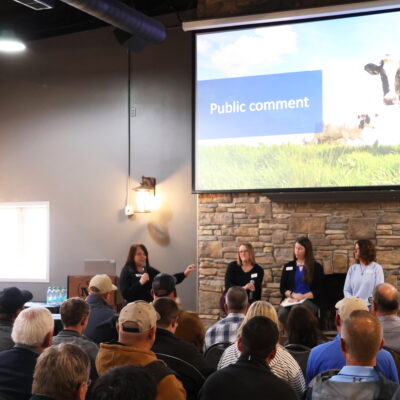
MDA is Asking for Public Input on the Socioeconomic Impacts of Mega-Dairies

Dairy farmers know better than anyone what it takes to keep a farm going through low prices, tight margins, long days, and decisions made far from the barn. Right now, Minnesota has a chance to speak up about what mega-dairies mean for family farms, rural communities, and the future of dairying in this state —…  Read More →

Stevens County Approved a Mega-Dairy — Now Minnesotans Must Speak Up

Public Has Until Oct. 1 to Comment on Impacts of Mega-Dairies

On Tuesday, Sept. 1, Stevens County officials approved Riverview’s conditional use permit for the proposed West River Dairy expansion near Morris, Minn. This decision largely clears the way for what will become the largest concentrated animal feeding operation (CAFO) in Minnesota history. Once completed, this 18,855-cow facility will be more than 60 times the size…  Read More →

When it Comes to Tissue & Soil Sampling, it Shouldn’t be an Either-Or Choice

Nutrient Testing May Not Always Indicate That More Nutrients are Needed

When raising crops, tissue and soil sampling are important practices to be used together to determine your nutrient management protocol. Soil testing reveals what nutrients are available in the soil while tissue testing shows a snapshot of nutrients in the plant part at the time of sampling. It is important to utilize both soil and…  Read More →

Submit Your Ag Legislative Ideas to the MDA Today

Let's Prioritize Soil Health, Farmland Access, Support for Small & Medium Farms, Water Quality

We currently have an important opportunity to support state policy that bolsters family farmers, clean water, healthy soil, and thriving rural communities. The Minnesota Department of Agriculture (MDA) has officially opened its 2027 Legislative Ideas Portal. Between now and Sept. 18, the MDA is gathering policy, program, and funding proposals from the community to help…  Read More →

LSP: MPCA’s Decision on West River Dairy Expansion Sets Bad Precedent

Stevens County Board Still Has Authority to Decide if Project Moves Forward

MORRIS, Minn. — The Land Stewardship Project (LSP) today sharply criticized the Minnesota Pollution Control Agency’s (MPCA) decision to allow Riverview LLP’s massive West River Dairy expansion to move forward without requiring a full environmental impact statement (EIS). If approved, the project would expand the operation from 7,855 cows to 18,855 cows, making it the…  Read More →