Search Results

Searched for: farmland for sale minnesota east central

Small, Complex & Focused

Not Doing Everything Makes Minding the Little Things Even More Crucial

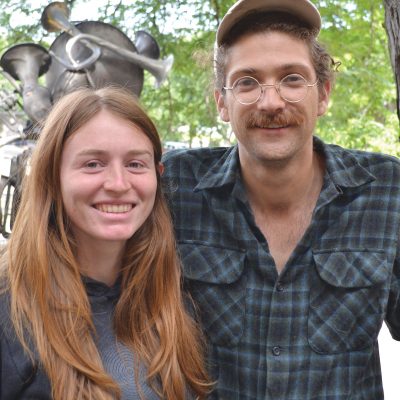
Smaller doesn’t always mean simpler. Consider Cella Langer and Emmet Fisher’s foray into being a Grade A micro-dairy — one that produces, processes, packages, markets, and sells pasteurized milk and yogurt. In a state that has lost 40,000 dairy farms in the past four decades, they are a tiny push in the opposite direction. How…  Read More

Grazing Cover Crops: Microbes = Money

To Olaf Haugen, microbes equal money. That’s because at the height of the growing season on his family’s farm in southeastern Minnesota’s Fillmore County, 70 percent of the dairy herd’s feed comes from grazing. He not only rotationally grazes permanent pastures, but runs his cows through plantings of annual cover crops, which he prefers to…  Read More

Farm Beginnings: When Farming Doesn’t go as Planned

When it comes to farming, oftentimes things don’t work out as planned—and sometimes that’s a good thing. Take for example Greg and Nancy Rasmussen, who on a recent fall afternoon are checking on some newly arrived chicks gathered under heat lamps in their barn. When the Rasmussens enrolled in the Land Stewardship Project’s Farm Beginnings course…  Read More

Feed the Plant, Starve the Soil

There are lots of reminders out there that we have a long ways to go before building soil health becomes a mainstay of our food and farming system. Some reminders are subtle, while others are about as blunt as a baseball bat to the head. A reminder of the latter variety is featured in the…  Read More

CCC: Cover, Cattle, Clean Water

Andy Marcum’s eye-opener was when he walked a ridge on his farm soon after snowmelt and noted the ground was speckled with the delicate, purple pedals of pasque flowers—more than he’d ever seen in his life. For Dan Jenniges, the aha moment came when he realized that he was grazing more cattle on fewer acres,…  Read More

Farm Transition Profile: Full Circle

One LSP Course Helped Launch Melissa Driscoll & Jay Hambidge's Ag Career — Years Later, Another Helped Wrap It Up

Note: LSP’s next Farm Transition Planning Course will begin meeting Jan. 27, 2026. For details and information on how to enroll, click here. Sometimes a successful farm transition requires a shoulder season — a period when the current owners are still present, still have their hands in the soil, so to speak, but the newbies…  Read More

Internationally Known Soil Health Pioneer Gabe Brown Featured at Farm Near Austin Sept. 16

‘Hemp & Food Health Day on a Regenerative Farm’ Sept. 17 Near Austin

AUSTIN, Minn. — Internationally known soil health pioneer Gave Brown will be featured at a regenerative farming field day Friday, Sept. 16, from 9 a.m. to 3 p.m., at the Tom Cotter farm near Austin (50203 205th Street). This event, which is being sponsored by the Minnesota Soil Health Coalition, Superior Cannabis Company and the…  Read More

2024 Minnesota Legislative Session Update: Less Than One Month Left! 

There is less than one month left in the 2024 Minnesota legislative session. This week, the House and Senate are finalizing and passing their separate omnibus policy and supplemental budget bills, which will then be sent to conference committees where differences between the proposals will be hammered out.   This session, the Land Stewardship Project has…  Read More

LSP’s 2024 Minnesota Legislative Platform 

The Session Begins Feb. 12

Since the 2023 session of the Minnesota Legislature ended last May, Land Stewardship Project members have been celebrating our historic wins and preparing to build upon them during the 2024 session, which begins Monday, Feb. 12. This past summer and fall, LSP organizers engaged in hundreds of one-to-one and group conversations with LSP members, supporters,…  Read More

Pollinators in Peril

As last week’s Congressional Research Service report on bee health makes clear, the crisis plaguing pollinators is not a single, big bad bogey man. It’s likely a combination of factors such as habitat loss, pesticide poisoning, introduced diseases and the stress of making domesticated honey bees the insect equivalent of migrant workers. That’s the bad…  Read More