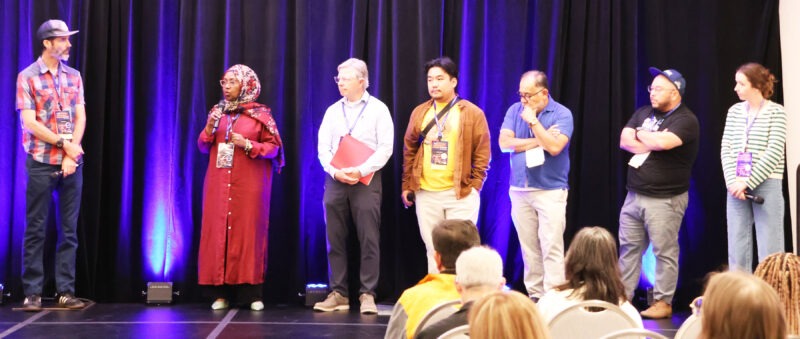
It’s hard to believe it’s been almost a month since the Land Stewardship Project participated in The Brave of Us: The Midwest Democracy and Power Summit June 11-12 at the Minneapolis Convention Center. The Summit was an inspiring two days focused on both learning from what we’ve accomplished and creating the future we want. Programming also included diverse art and music that grounded participants in hope and joy, including youth breakdancers from the Hmong community, Dakota singers and prayer-keepers, and a vibrant ofrenda (altar) that honored ancestors and those abducted by U.S. Immigration and Customs Enforcement (ICE) agents.
LSP is a founding member of the Immigrant Defense Network (IDN), a coalition of over 90 organizations and faith groups that are committed to protecting and advancing the constitutional rights of immigrants across Minnesota. IDN has trained thousands of constitutional observers over the past year, and LSP has helped to train over 900 constitutional observers specifically in greater Minnesota, western Wisconsin, and northern Iowa.
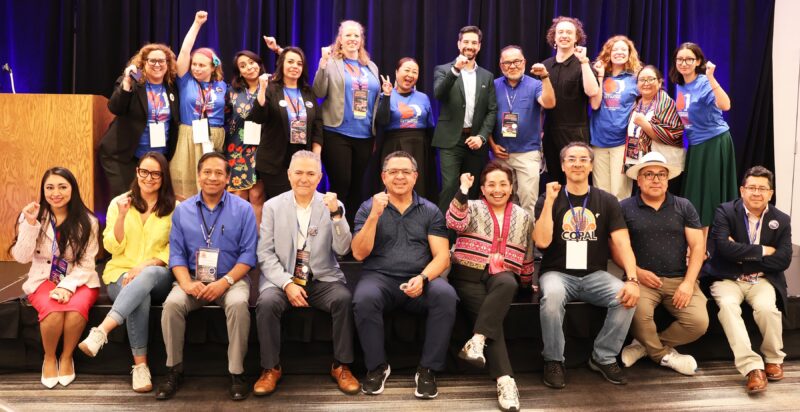
One of the coolest things about the Summit was being in the same room as people we’ve been organizing with for a long time, but never been together with in person. Besides a solid representation from LSP member-leaders, there was a great turnout of organizers from our rural-focused IDN sub-group, and sitting around a physical table together helped our work to feel more relational and less transactional.
We had an opportunity to exercise our collaboration in real-time on Friday, June 12, when word came during our morning session that ICE was conducting a large raid in Bemidji, Minn. All the people we would normally activate during an ICE raid were in the room, so we stepped out of the session, called contacts on the ground in Bemidji and nearby, and gathered information so we could respond with support for detainees and their families.
I had been slated to speak at that point about IDN’s rural organizing, but we decided to pivot and several of us went on stage to walk attendees through how IDN has been operating and how we were responding to the Bemidji raid in the moment. I shared how I leaned into rural Minnesota contacts I have through IDN and LSP. We reached out for insight and to determine what support they might need, and then they were able to relay information back to the broader coalition.
While the Bemidji raid was upsetting and heartbreaking, it also gave Summit participants a real-world example of how IDN has built an infrastructure of relationships across the state to quickly share information and mobilize folks on the ground.
One way LSP is continuing to do this work this summer is through our People’s Farm Dinners, which are gathering small groups at LSP member-farms across Minnesota and western Wisconsin and building connections, trust, and community within rural geography. Intentional gatherings like these equip communities to respond not only to moments of crisis, but also to the long-term work of creating thriving, diverse, and welcoming small towns and rural spaces.
Knowing that we are growing and building a movement that strengthens rural communities keeps me hopeful for the future. As part of a vast ecosystem of partners, LSP is working to create the kind of world we want to see — building up the diversity of the Earth we call home, from tiny soil microbes to our immigrant neighbors.
LSP organizer Nick Olson farms in Litchfield, Minn., and can be contacted via e-mail. For more on LSP’s partnership with allies who are working on immigrant rights issues, see our Community Care web page.