
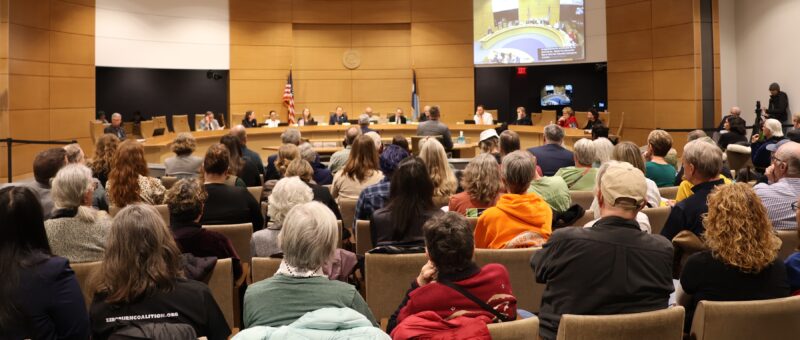
How critical is nitrogen to raising corn in the Midwest? Well, consider the fact that farmers feel compelled to pay for it, even at a time when the war with Iran is sending prices to dizzying heights during the 2026 planting season. The agronomic value of nitrogen became clear during a special oversight hearing held by the Minnesota Senate’s Environment, Climate, and Legacy Committee April 7 in Saint Paul.
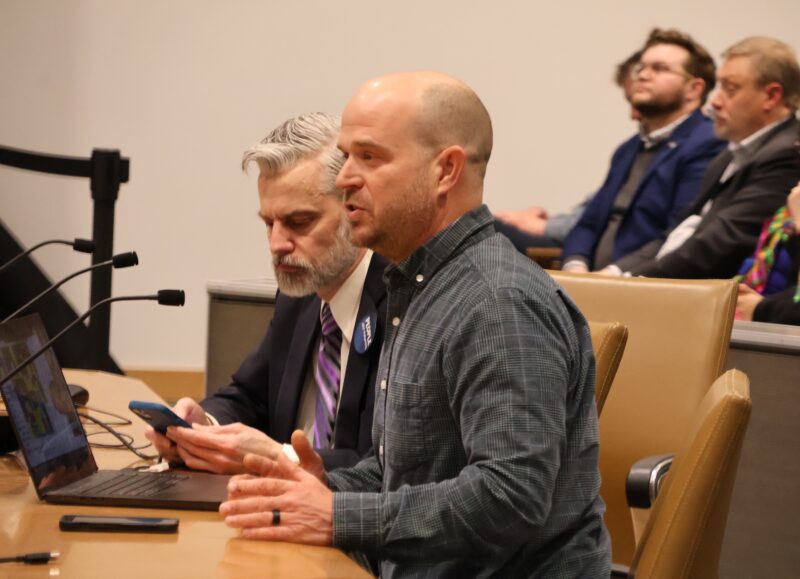
“It’s very important to me because it’s a huge line item in my farm” budget, said southeastern Minnesota crop farmer Martin Larsen during his testimony, which was given before an overflow crowd in a cavernous room of the Senate Building. “I purchased approximately $75,000 worth of it this year.”
And Larsen, who is a member of the Land Stewardship Project’s Soil Builders’ Network, made that financial outlay despite the fact that he knows there is another significant cost to agriculture’s reliance on this source of fertility. As an employee of the Olmsted County Soil and Water Conservation District and a serious caver, Larsen has had plenty of chances to measure just now much nitrate — a form of nitrogen — contamination makes it into groundwater when it escapes row-cropped fields.
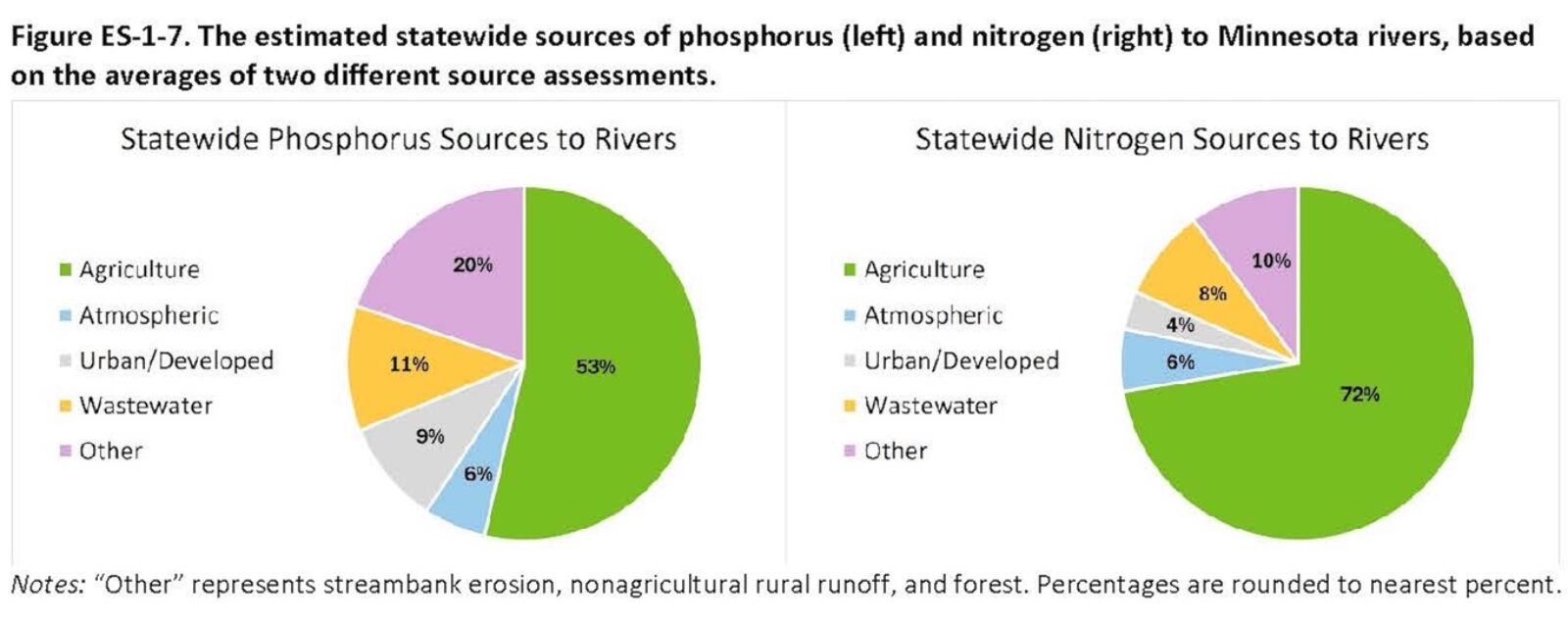
In the U.S. on average over 34 pounds of nitrogen is lost on each cultivated crop acre per year (the average Midwestern corn grower annually applies roughly 150 pounds of nitrogen per acre). In Minnesota, 70% of nitrogen pollution comes from commercial fertilizer escaping cropland.
From Larsen’s experience, once roughly 60% of a drainage basin is covered in row crops, it’s almost guaranteed the Environmental Protection Agency’s nitrate drinking water health standard of 10 parts per million will be succeeded. And since during the past several decades the vast majority of the Midwestern agricultural landscape has transitioned from a diversity of crops and perennial plant cover to either corn or soybeans, nitrogen pollution is a major problem in areas like southeastern Minnesota.
That’s why it was so important that the Environment, Climate, and Legacy Committee was holding an oversight hearing on the issue. The goal of the meeting was not only to hear about the environmental and human health risks of nitrate pollution, but to attempt to find out from state agency officials responsible for protecting our environment why so little progress has been made on the nitrate issue, despite years of research, major reports, and “reduction” programs based on mostly voluntary initiatives. The driving force behind the hearing was a coalition of Minnesota environmental groups called “People Not Polluters,” which is working to make sure state agencies such as the Minnesota Pollution Control Agency (MPCA) don’t fall prey to “polluter capture” — a situation where major polluters such as factories and concentrated animal feeding operations are allowed to foist the environmental cost of doing business onto the public.
As Peter Wagenius, legislative director of the Sierra Club’s North Star Chapter, told members of the Senate committee, the nitrate pollution problem is a prime example of polluters being let off the hook while the rest of us pay the price. For example, retailers who sell commercial fertilizer are major players in recommending to farmers how much nitrogen to apply. But they have an innate conflict of interest when it comes to nitrate pollution: the more fertilizer they sell, the more money they make.
“Their goal is to sell the most fertilizer, not the right amount of fertilizer,” Wagenius said, adding that state agencies such as the MPCA “promote and embrace” this practice by not holding fertilizer companies and suppliers accountable.
It should be noted that it’s often recommended by agronomists to add extra fertilizer during spring planting, or to add it in the fall well before the growing season, as a way to provide “yield insurance” for farmers. This can result in not only excess nitrogen in our water and atmosphere (nitrous oxide is a powerful greenhouse gas) but a lot less money in farmers’ bank accounts.
“Nothing grows without nitrogen,” Senator Steve Green reminded folks at one point during the hearing. “This is what feeds us. This is how we live.”
That’s been true since the Haber-Bosch process was invented by German chemists over a century ago. But there is increasing evidence that we can grow profitable crops with a lot less nitrogen than is often recommended. In fact, if you’re a farmer, there can be a financial incentive to use less fertilizer. When University of Minnesota Extension recently analyzed financial data from thousands of farms, it found that the most profitable operations spent an average of $217 per acre on fertilizer for corn while the least profitable farms spent $289 per acre. An ongoing on-farm trial in southeastern Minnesota has shown that cutting about 20 pounds of nitrogen per acre did not decrease yields for five out of the eight farms that are participating. Two days after the Senate oversight hearing, I sat in on an LSP call with four Minnesota farmers who are finding that soil health practices like cover cropping are allowing them to cut nitrogen applications without taking major yield hits.
“We’re trying to do what’s best for the land as well as ourselves,” said one of the farmers on the call. “It’s great conservation can do both.”
And the sooner more farmers cut those rates, the better, because there’s another significant cost to having too much of a good thing in the environment. Aleta Borrud, a retired physician from Rochester, Minn., who is trained in epidemiology, presented to the Senate committee a summary of scientific studies showing how consuming water with even relatively low amounts of nitrates may be hazardous to human health. She described the Iowa Women’s Health Study, which collected data on almost 42,000 women over several years. It found an association of four kinds of cancers in areas where nitrate levels were above five parts per million. Remember — the current EPA standard is 10 parts per million. A country-wide study in Denmark found an increase in colorectal cancer when nitrate levels in water were less than four parts per million. A cornerstone of science is that correlation is not causation, but attempts to dismiss outright connections between health problems and what people consume in their water are on increasingly thin ice.
Borrud, who owns farmland and serves on the Land Stewardship Project’s board of directors, also offered a reminder that nitrate pollution does not exist in a vacuum, and can be a key canary in the coal mine.
“If you see nitrates [in the water], you’re going to see pesticides and possibly also organic materials such as coliform bacteria,” she said.
Paul Wotzka is a hydrologist and president of the Minnesota Well Owners Organization. He testified remotely from his Wabasha County farm that once nitrogen and those other contaminants get into groundwater, it’s all but impossible to remove them. The City of Des Moines is certainly finding that as it spends millions of dollars annually removing nitrates from its drinking water. Wotzka said reverse osmosis systems (a solution often touted by government environmental experts) can remove nitrates present in private wells, but they are expensive and require maintenance. As he and other testifiers made clear, prevention is much better than attempting to treat the problem after the fact.
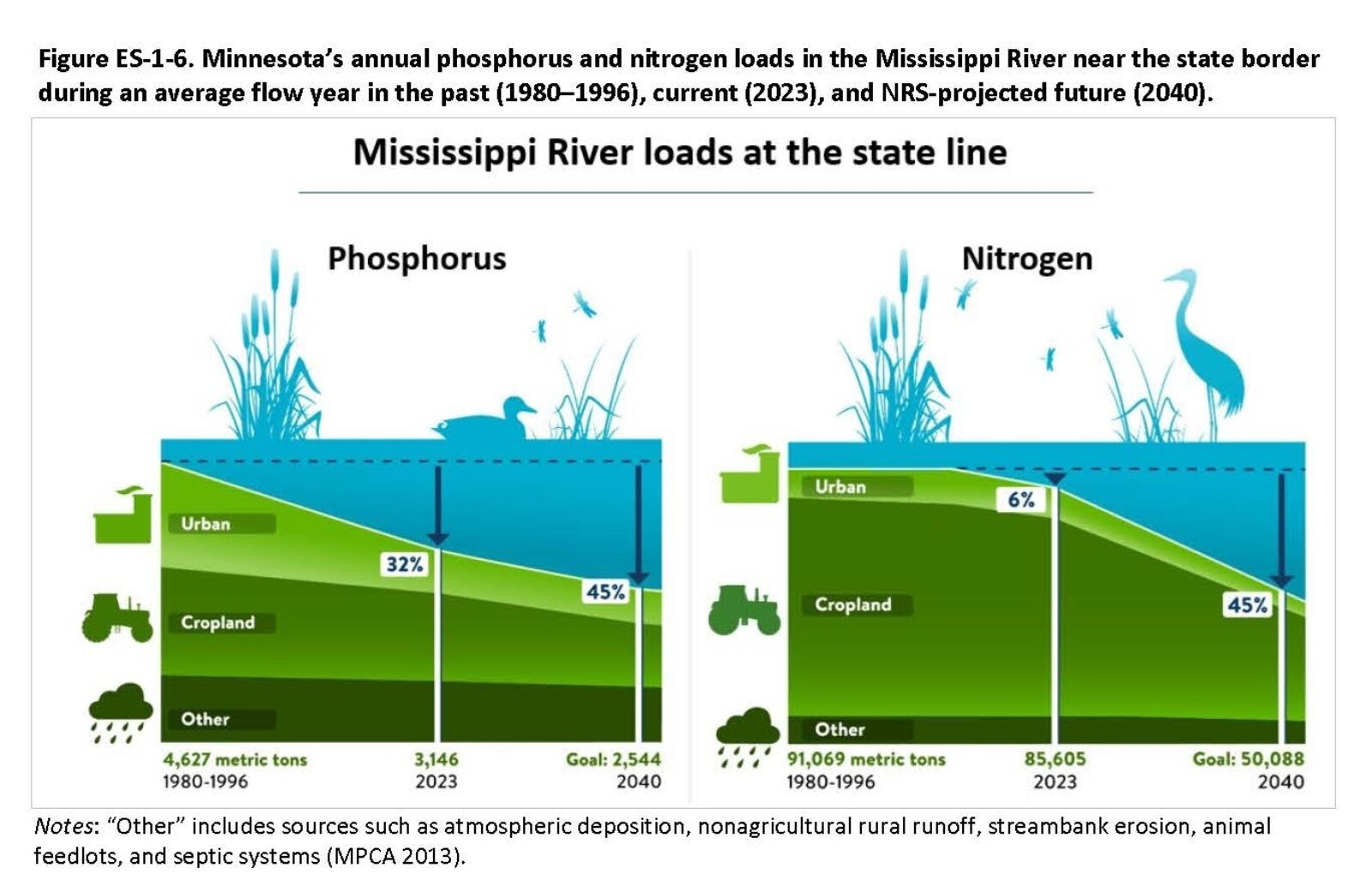
Which brought hearing participants back to the question of the day: were Minnesota agencies going to continue business as usual and allow those who are responsible for water pollution a free pass while the public foots the bill? Tom Johnson, the director of government relations and external affairs for the MPCA, said Minnesota’s Nutrient Reduction Strategy (NRS), which was first released in 2014 and was updated in 2025, has made some progress, including reducing nitrate loads by 6% in the Mississippi River.
However, statewide nitrate concentration levels in groundwater and rivers show “mixed results,” according to the NRS. In areas of high nitrate concentration in the Mississippi River Basin, reductions of over 30% are needed to meet drinking water standards and protect aquatic life, according to Johnson. The plan in the next several years is to scale up efforts like “promoting” more cover crops and continuous living cover on the landscape and upgrading wastewater treatment plants.
Some Senators expressed frustration with whether a “business as usual” approach would produce results. It’s estimated the NRS could cost over $1 billion annually to implement during the next several years. Committee vice-chair Jennifer McEwen was alarmed that corporate players who have profited from “this form of wealth extraction” will yet again be allowed to avoid paying for pollution.
“I can tell you who has a billion dollars — it’s not working Minnesotans, it’s not small farmers or the landowners in rural areas,” she said. “But I know the Cargills have it.”
Johnson, for his part, said the NRS document was “agnostic” about funding sources.
Larsen, the southeastern Minnesota farmer, said he’s willing to play his part in reducing how much nitrate makes its way into the environment, but he can’t do it without diversifying his own cropping system. He’s a founding member of the “Oat Mafia,” a group of farmers in the region who are promoting the integration of this small grain back into corn-soybean rotations. He’s excited that oats can not only dramatically reduce a farm’s reliance on nitrogen fertilizer, but that there’s a growing market demand for it on the part of health-conscious eaters.
But he and the other farmers have been frustrated with how little locally produced oats Minnesota-based food processors like General Mills purchase. He called for policies that help prime the pump for market-based solutions by encouraging local companies to buy small grains such as oats “in their own backyard.”
Farmers also need policy incentives to de-risk diversifying, something Larsen has seen work in his own community with the Olmsted County Groundwater Protection and Soil Health Program; there’s currently an LSP-backed proposal in the Legislature (to read the bill, see lines 39.32 to 40.12 in this link) to expand that initiative to more southeastern Minnesota counties. LSP is also pushing for lawmakers to support establishing more farmer-to-farmer soil health hubs and to put into practice the recommendations of the Southeast Minnesota Nitrate Strategies Collaborative Work Group to accelerate a transition to perennial crops, pasture, small grains, and harvested cover crops on millions of acres.
The word of the day? Diversifying cropping systems. Said Larsen toward the end of his testimony, “To me, it’s abundantly clear that if we’re going to make headway on nitrates in groundwater we need to farm corn and soybeans differently, or farm something different than corn and soybeans.”
Brian DeVore, LSP’s managing editor, can be reached via e-mail. For more on LSP’s priorities during the 2026 session of the Minnesota Legislature, click here. Check out testimony LSP organizer Laura Schreiber gave before the Minnesota Senate Ag Committee in March: “How Might Minnesota be a Leader in Creating a Resilient Agriculture?”