Across South Dakota, North Dakota, and Minnesota, rural residents are facing a growing wave of industrial dairy proposals that could reshape their communities for decades. On June 3, a coalition of organizations hosted “Community Responses to Industrial Dairy Proposals in SD, ND, and MN,” a webinar where community members and advocates shared what they are seeing on the ground — and how neighbors are organizing to protect their water, roads, local economies, and democratic voice.
The event, which was hosted by the Land Stewardship Project, Dakota Rural Action, Dakota Resource Council, Food & Water Watch, FarmSTAND, and the Minnesota Center for Environmental Advocacy, comes at a time when the three states are grappling with massive dairy operations being proposed by one industry giant: Riverview LLP.
A Changing Dairy Landscape
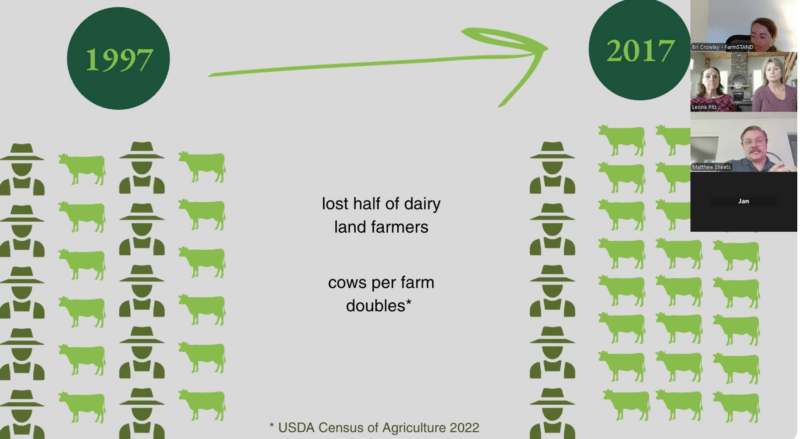
During the webinar, speakers described a dairy industry that has changed dramatically over the past several decades. In Minnesota, the number of dairy farms fell by half between 1997 and 2017, even as the average herd size doubled. That consolidation has left fewer farms controlling more cows, more land, and more influence over local decision-making.
Riverview was identified in the webinar as one of the major forces behind this shift. As large operations expand across the region, residents are asking whether these projects truly serve rural communities — or whether local people are being asked to absorb the risks while outside corporations capture the benefits.
What Communities Are Concerned About
Although each community is different, speakers from all three states raised many of the same concerns. Water was at the top of the list. Residents questioned how much groundwater large dairies would draw from local aquifers and what would happen to wells, streams, and rivers if manure runoff contaminated the water supply.
They also raised concerns about public costs. Large concentrated animal feeding operations (CAFOs) can require road upgrades, water treatment improvements, monitoring, and emergency response capacity. Community members asked a basic but important question: who pays when private corporations need public infrastructure to make their projects work?
Accountability was another major theme. Participants described the challenge of getting clear answers from companies and regulators during the permitting process. For many rural residents, the process can feel confusing, technical, and tilted toward approval before the public has had a meaningful chance to weigh in.
Organizing Makes a Difference
One of the strongest messages from the webinar was that industrial dairy proposals are not automatically a “done deal.” Speakers from South Dakota described how neighbors organized around a proposed 25,000-head dairy by hosting informational meetings, sharing research, talking with the media, and making sure local decision-makers heard directly from the people who would be affected.
Another example came from Minnesota, where community organizing helped lead to the withdrawal of a swine CAFO permit. These stories matter because they show that rural people have power when they act early, work together, and refuse to let important decisions happen behind closed doors.
How Neighbors Can Take Action
The presenters encouraged community members to get involved as early as possible in zoning, township, county, and permitting processes. Waiting until a permit is nearly approved can leave residents with fewer options. Showing up early gives neighbors more time to ask questions, gather information, and organize a response. Here are some tips that emerged from the webinar:
- Attend local zoning, township, county, and permitting meetings.
- Ask who will pay for road damage, water monitoring, cleanup, and other public costs.
- Demand a full environmental review for projects that could affect water, air, land, and quality of life.
- Connect with neighbors and local organizations so no one has to fight alone. This manual from LSP provides information on organizing locally.
- Consider serving on local boards, commissions, or councils where these decisions are made.
Rural Communities Deserve a Real Voice
The webinar made clear that the fight over industrial dairy is about more than one company or one permit. It is about whether rural communities have the information, time, and political power they need to shape their own future.
When neighbors come together, they can challenge the assumption that corporate-scale agriculture should move forward without scrutiny. They can demand transparency from regulators, accountability from companies, and respect for the people who live with the consequences long after the permit hearing is over.
If an industrial dairy or other large CAFO is proposed near you, start now: talk with your neighbors, attend public meetings, ask hard questions, and organize for the future your community deserves.
LSP communications specialist Heather Benson can be reached via e-mail.
Contacts & Web Links:
- Land Stewardship Project
Animal ag organizer: Matthew Sheets
E-mail: msheets@landstewardshipproject.org - Dakota Rural Action
- Dakota Resource Council
- Food & Water Watch
- FarmSTAND
- Minnesota Center for Environmental Advocacy
Watch the entire webinar here: