
Land Stewardship Project

Land Stewardship Project
  • About Us
    • Our Mission
    • Long Range Plan
    • Staff Directory
    • Board of Directors
      • LSP Board Committees
    • LSP Steering Committees & Working Groups
    • Contact Us
    • Past LSP Projects
    • Employment & Volunteer Opportunities
    • LSP Publications
    • Financial Statements
  • The Latest
    • Community Care
    • Songs for the Soil
    • CSA Farm Directory
    • Upcoming Events
    • News
      • News Releases
      • Media Contacts
      • LSP in the News
    • Blog
    • Podcast
    • Land Stewardship Letter
    • LIVE-WIRE Sign-up
    • Myth Busters
    • Fact Sheets
    • Farm Crisis Resources
  • For Farmers & Landowners
    • Farmland Clearinghouse
    • New Farmers
      • Farm Beginnings Class
      • Journeyperson Course
      • Farm Dreams
      • Accessing Farmland
      • Farmland Clearinghouse
      • Beginning/Retiring Farmer Tax Credit
      • Beginning Farmer Profiles
      • Fresh Voices Podcast Series
    • Retiring Farmers & Landowners
      • Farmland Clearinghouse
      • Farm Transition Course 2026
      • Conservation Leases
      • Beginning/Retiring Farmer Tax Credit
      • Land Transition Tools
      • Transition Stories
    • Soil Health
      • Cover Crops
      • Grazing
      • No-till
      • Microbiology
      • Kernza
      • Soil Builders’ Network
      • Soil Builders’ E-Letters
      • Soil Health Steering Committee Members
      • Ear Dirt Soil Health Podcast Series
    • Cropping Systems Calculator
    • Conservation Leases
  • Creating Change
    • Community-Based Food Systems
      • Ear Bites Community-Based Food Podcast Series
    • Policy Campaigns
      • Soil Health & Climate Change
      • Healthcare
      • Factory Farms
        • Anti-Competitiveness & Price Gouging
      • Federal Policy
        • A Farm Bill For Us
      • State Policy
        • MN Farm, Food & Climate Funding
      • Developing Leadership
    • Justice & Stewardship
    • Organizational Stewardship
  • Get Involved
    • Your Membership Matters
    • Take Action!
    • Upcoming Events
    • Land Stewardship Action Fund
    • Connect with LSP
      • Stay Connected
      • Join, Donate, or Renew Today!
      • Shop
      • Employment & Volunteer Opportunities
      • Legacy Giving
    • Network with LSP Members
      • Farmland Clearinghouse
      • Soil Health
    • Farmland Clearinghouse
  • Join, Donate, or Renew Today!
  • Stay Connected
  • Contact Us
  • Shop
Search
More...

Ear Bites Community-Based Food Podcast Series

Share

  • Facebook
  • Pinterest
  • email

Check out LSP’s ongoing Ear Bites podcast series for conversations on how we can build a resilient community-based food system. You can check out all 393 episodes of our Ear to the Ground podcast here.

Ear to the Ground 392: Diversity’s Diet

Farmer and small grains marketer Matt Kruger sees a rotation based on raising food grade crops as a way for farmers to get rewarded for building soil health. It’s also a way to fight the only thing he truly hates.

Ear to the Ground 386: A Farm to School Taste Test

How a small, rural school district is taking a trial run at sourcing food from local farmers.

Ear to the Ground 385: A Longer Local Lunch Season

Jeanine Bowman believes having locally produced food on her school’s menu shouldn’t be a special occasion — it should be a daily part of nourishing kids while supporting the farm economy.

Ear to the Ground 384: Power Play

Ag antitrust expert Austin Frerick sees the current food system as a mechanism for modern robber barons to treat rural communities as mere “extraction colonies.” But, he argues, changing how we eat isn’t enough —  we need to disrupt how power is distributed all along the food chain (2 of 2 parts).

Ear to the Ground 381: A Key Ingredient

Chris MacLeod came to Mill City hoping to source local grain while pursuing his passion for baking. When confronted with the reality of the export-driven commodity system, he doubled down on connecting with local farmers.

Ear to the Ground 379: Proclaim Your Grain

Gilbert Williams is a pioneer in processing local grains for local markets. His advice? Go stand in the field, put your name on the package, and tell your story.

Ear to the Ground 378: Dumping the Doubts

Noreen Thomas got into organic crop farming almost three decades ago as a way to produce healthy food and survive economically. Today, she’s the mentor she never had.

Ear to the Ground 377: Flour Power

When Peter and Brittany Haugen sought to diversify their western Minnesota crop farm, they realized there was little infrastructure available to support small grains. So they forged their own link in the food chain by launching Sandhill Mill.

Ear to the Ground 362: Regenerative Return

When Roy Pfaltzgraff returned to his family’s northeastern Colorado cropping operation in 2016, he was committed to making farming a fulltime endeavor that built resilient soil, supported the community, and produced healthy food.(Second in a three-part series on small grains and community-based foods.)

Ear to the Ground 361: Additive Vs. Extractive
Bob Quinn says regenerative farming and rural economic revitalization go hand-in-hand. For him, it all started with a handful of “King Tut’s wheat.” (First in a three-part series on small grains and community-based foods.)

Ear to the Ground 360: Food Bank Booster

At a time when rural residents are grappling with high food insecurity, an innovative Wisconsin program is connecting local farmers with local eaters.

Ear to the Ground 347: Bite-by-Bite

Mapping a rural region’s “community food assets” reveals isolated islands of opportunity in a sea of corn and soybeans. LSP’s Scott DeMuth says now is the time to connect the dots and create a new relationship between farmers, eaters, and the places they live in. For a transcript of this podcast, click here.

Ear to the Ground 335: Bumping Elbows

From raising produce and working in a restaurant to teaching food safety and managing a farmers’ market, Sara George has experienced “farm-to-fork” from just about every angle possible. This has given her invaluable insights into the barriers, and opportunities, involved with connecting farmers and institutional buyers.

Ear to the Ground 332: Real Food, Real Impact

Beverly Dougherty’s Real Food Hub is out to prove that connecting local farmers and local eaters makes sense nutritionally and financially — and is just plain fun.

Ear to Ground 331: Reality Check

Direct-marketing expert and farmer Ryan Pesch sees a lot of potential in the community/local food movement, but farmers hoping to enter that realm need to ask some key questions first.

Ear to the Ground 282: Kitchen Table Economics

LSP’s Amy Bacigalupo talks about why the organization is diving deep into helping communities build food systems that can stem the tide of commodities (and wealth) leaving the land.

Ear to the Ground 283: Ending the Extractive Economy

Ken Meter draws on decades of community analyses to explain why agriculture will never be truly regenerative until we fix our dysfunctional food system.

Ear to the Ground 284: Hive of Healthy Activity

From Kris Shelstad’s point of view, an empty building on Main Street is packed full of opportunities for revitalizing her hometown’s economic and cultural life, one conversation at a time.

Ear to the Ground 322: Lunchroom Stewardship

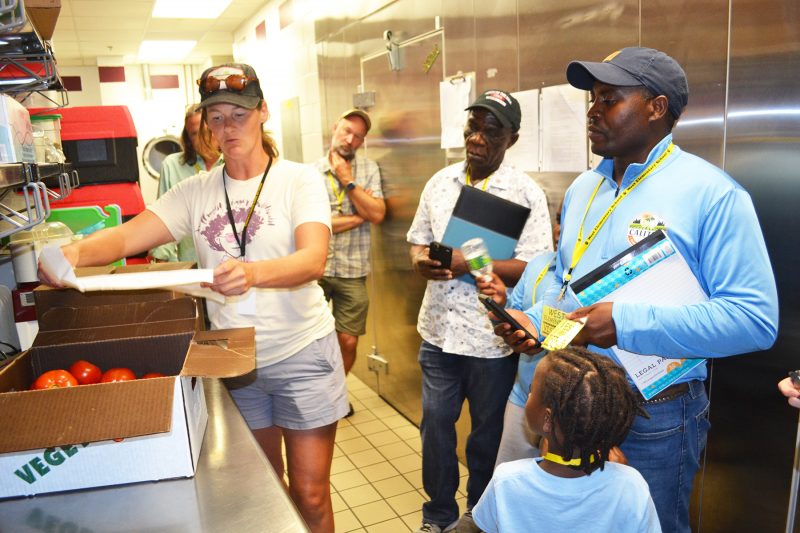
Aimee Haag is proving that farm-to-school arrangements can benefit kids, communities, and farmers…one tomato at a time.

  • Creating Change
    • Community-Based Food Systems
      • Ear Bites Community-Based Food Podcast Series
    • Policy Campaigns
      • Soil Health & Climate Change
      • Healthcare
      • Factory Farms
        • Anti-Competitiveness & Price Gouging
      • Federal Policy
        • A Farm Bill For Us
      • State Policy
        • MN Farm, Food & Climate Funding
      • Developing Leadership
    • Justice & Stewardship
    • Organizational Stewardship

Contact:

Brian DeVore, Ear to the Ground podcast producer, e-mail, 612-816-9342

Upcoming Events

×

January 2026

Tuesday January 20

5:00 pm – 8:00 pm
Making the Most of Each Acre: Integrating Livestock onto Cropland
Tuesday January 20
5:00 pm – 8:00 pm
Making the Most of Each Acre: Integrating Livestock onto Cropland
680 Byron Main Ct. NE Byron, MN 55920

In this interactive workshop, farmers will learn about important soil, finance, crop, and livestock concepts related to crop and livestock integration. In addition to presentations by Extension educators, participants will engage in activities to put their newfound knowledge to the test. Participants will gain knowledge, new connections, and a personalized plan for integrating crops and livestock on their farm.
 
For details and to register, click here. 

Wednesday January 21

5:00 pm – 7:00 pm
Farm Aid Farmer Listening Session
Wednesday January 21
5:00 pm – 7:00 pm
Farm Aid Farmer Listening Session
Zoom online

What’s your story?

Farm Aid wants to hear from farmers about what they experienced in 2025 and what concerns they have heading into the 2026 season. Farm Aid will use the information and stories we hear during this listening session to make sure that our advocacy and policy work is grounded in the needs and experiences of family farmers right now.

Come learn more about Farm Aid’s policy and advocacy work, share your story with the Farm Aid community, and hear from farmers around the country about what they’re experiencing.

For more information and to register, click here. 

If you can’t make it to this listening session, share your story with us by filling out this form. 

Thursday January 22 – Saturday January 24

GrassWorks Grazing Conference
Thursday January 22 – Saturday January 24
GrassWorks Grazing Conference
La Crosse Center, 300 Harborview Plaza, La Crosse, WI 54601, USA

The 34th Annual GrassWorks Grazing Conference will take place Jan. 22–24 at the La Crosse Center in La Crosse, Wis.

The 2026 conference will be centered on the theme: “Pastures to Prosperity: Building financially smart grazing systems for today’s land stewards.” This year’s focus highlights practical, innovative, and profitable approaches to grass-based livestock production, equipping farmers with tools to strengthen both environmental and economic sustainability.

GrassWorks is excited to welcome two nationally recognized keynote speakers:

  • Melinda Sims, Wyoming cattle rancher and Ranching for Profit instructor, known for her expertise in financial decision-making and resilient ranch business models.
  • Dwayne Estes, Executive Director of the Southeastern Grasslands Institute, a leading voice in grassland restoration, regenerative grazing, and agricultural landscape resilience.

Conference highlights include:

  • More than 60 expert speakers from across the grazing and agricultural sectors
  • Over 45 industry exhibitors featuring the latest in grazing tools, technology, and services.
  • Workshops for beginning, expanding, and experienced graziers
  • Panel discussions on farm profitability, land stewardship, and long-term business resilience.
  • Robust networking opportunities with farmers, technical service providers, and industry partners.

The GrassWorks Grazing Conference draws farmers, agricultural professionals, educators, and conservation partners from across the Midwest and beyond. Attendees can expect practical education, actionable strategies, and meaningful connections.

Registration information can be found at https://grassworks.org/events/grazing-conference.

Tuesday January 27

9:00 am – 3:00 pm
'Beyond Exports: Rebuilding Local Markets' LSP Soil Health Workshop
Tuesday January 27
9:00 am – 3:00 pm
'Beyond Exports: Rebuilding Local Markets' LSP Soil Health Workshop
Rochester International Event Center, 7333 Airport View Dr SW, Rochester, MN 55902, USA

On Tuesday, January 27 join Land Stewardship Project for our signature winter workshop. This year’s theme is “Beyond Exports: Rebuilding Local Markets”.

The workshop will be held from 9am to 3pm at the Rochester International Event Center (73333 Airport View Dr SW, Rochester, MN 55902).  Our featured keynote speaker is Martin Larsen, a farmer who is a founding member of the “Oat Mafia” in south-central Minnesota.  In the morning session, Martin will highlight the challenges and opportunities facing all farmers as they look beyond export load-out at the elevator and instead look to recreate the local markets that once served our farmers and consumers.  He will share his journey establishing food grade oats and founding the “oat mafia” and the agronomic, economic, and market impacts it has made for his farm.

After the keynote, attendees will have the option to choose two of three breakout sessions with local experts:

Session 1: Economics of Diversifying Your Rotations
Session 2: Marketing Your Alternative Crops
Session 3: Derisking Diversifying Your Rotations

Breakfast and a catered lunch will be provided.  

For details and to register, click here.
 
You may also contact event organizer Shea-Lynn Ramthun at 651-301-1897 or slramthun@landstewardshipproject.org. 

5:30 pm – 8:00 pm
LSP Farm Transition Planning Course
Tuesday January 27
5:30 pm – 8:00 pm
LSP Farm Transition Planning Course
Zoom Online

The Land Stewardship Project’s long-running course for farmers and other landowners looking to transition their agricultural operations to the next generation is expanding into South Dakota in 2026. The Land Stewardship Project (LSP) Winter Farm Transition Planning Course, which enters its 10th session in 2026, provides a holistic opportunity to dig into important topics and learn from experienced farmers and professionals about the options that farmers and landowners have when looking to pass their farm on.

The standard Zoom online LSP course will be held on seven Tuesday evenings starting on January 27 and running through March 10. The sessions build on one another, so attendance at all sessions ensures the greatest understanding and planning opportunities. The course fee is $250 per family, and registration is open through Jan. 9 at https://landstewardshipproject.org/transition2026.

New this year is an expanded course offering for South Dakota attendees as part of a partnership LSP has formed with Dakota Rural Action and Rural Revival.

The South Dakota course, led by Dakota Rural Action and Rural Revival and using the LSP curriculum, includes seven weekly in-person sessions, with a full-day Saturday kick-off session, and another full-day session to close the training. Sessions two through six will take place on Tuesday evenings for two-and-a-half hours. The dates are: Jan. 31, Feb. 3, Feb. 10,  Feb. 17, Feb. 24, March 3 and March 14. As with the fully online course, the course fee is $250 per family, and the registration deadline is Jan. 9. To register for the South Dakota course, visit https://qrco.de/farmtransitions2026.

Presenters at both workshops will include other area farmers who are implementing farm transition plans, as well as professionals representing the legal and financial fields as they relate to agricultural businesses. Workshop participants will have an opportunity to begin engaging in the planning process as well as to learn about resources for continuing the process after the workshop has ended.

View Full Calendar

Recent Posts

  • Tell Congress Farmers Need Real Relief & Real Solutions January 18, 2026
  • LSP Stands With Immigrant Neighbors in Rural Minnesota  January 12, 2026
  • ‘Beyond Exports’ Focus of Jan. 27 Crop Diversification Meeting in Rochester January 11, 2026
  • Why LSP Stands With Our Immigrant Neighbors January 8, 2026
  • Priorities for 2026 Legislature: Soil, Water, Land Access, Consolidation, Farm to School January 8, 2026

Montevideo

111 North First Street
Montevideo, MN 56265

(320) 269-2105

Lewiston

180 E. Main Street
Lewiston, MN 55952

(507) 523-3366

Minneapolis

821 E. 35th Street #200
Minneapolis, MN 55407

(612) 722-6377

  • Privacy Policy

Copyright © 2026 Land Stewardship Project. All rights reserved.

https://landstewardshipproject.org/earbites